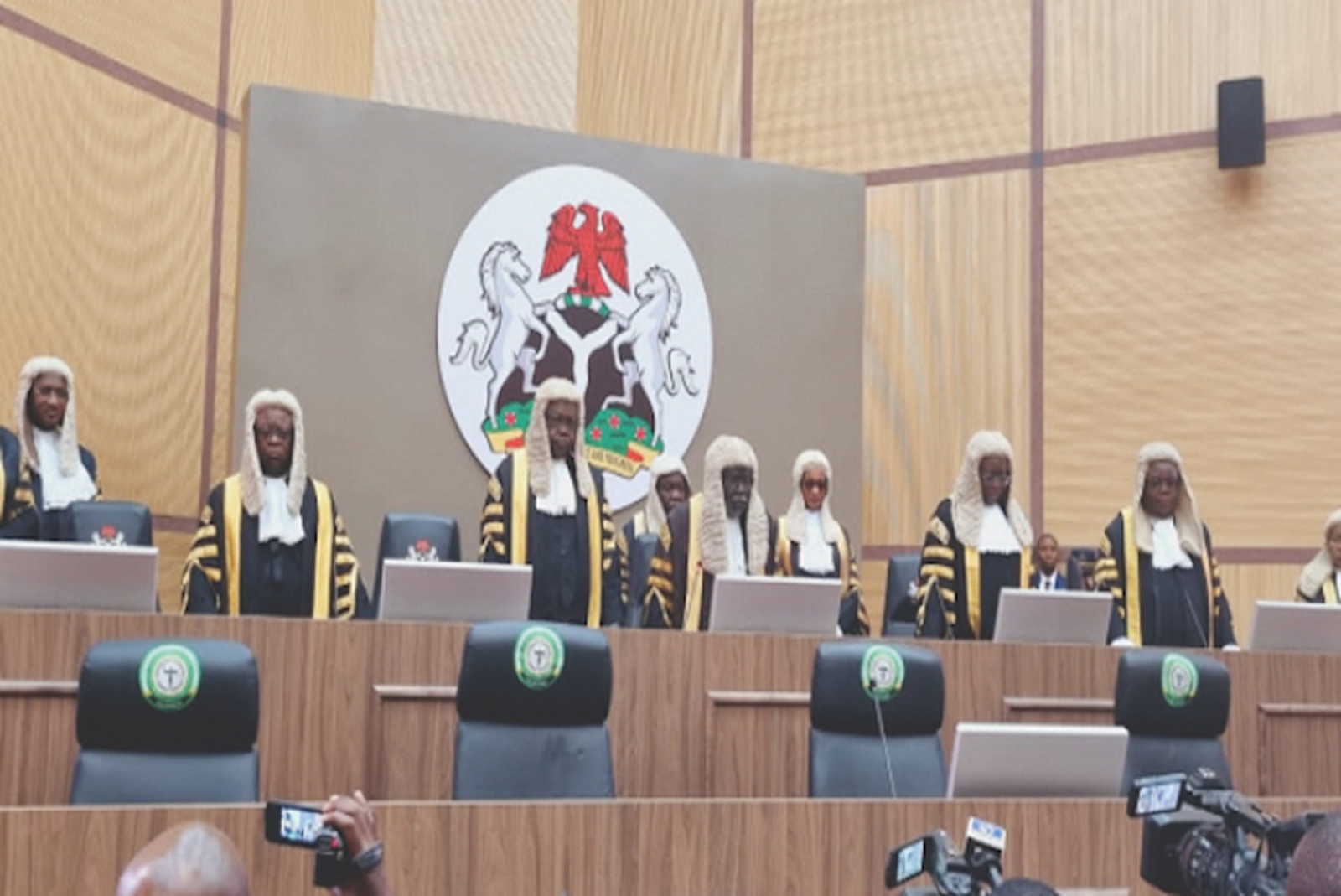









As the Living Oracles of the Law wielding the power of life and death, some judges sometimes wear their pride on their sleeves. They take rather undue advantage of their status as the most powerful being in the courtroom to suppress lawyers appearing before them. In a recent statement, the Nigerian Bar Association (NBA) boldly acknowledged that some Nigerian judges bully lawyers. These judges do this in abuse of their power to punish for contempt, and as a tool for intimidating lawyers whom they believe are on the lane of errancy. The NBA’s thought-provoking statement came on the heels of recent reports of lawyers being subjected to degrading and demeaning treatment in courtrooms, including being asked to kneel or stand facing the wall.
Expressing its displeasure, the NBA roared:
The power to punish for contempt is an extraordinary jurisdiction that must be exercised sparingly and only in clear cases where the administration of justice is under immediate threat. The Judge, by virtue of office, is the more powerful actor in the courtroom. The use of contempt powers in circumstances that do not clearly amount to obstruction of justice creates an atmosphere of intimidation and amounts to judicial bullying. The contempt jurisdiction exists to protect the court, not to silence counsel or penalise advocacy undertaken in the discharge of professional duty.
How Judicial Bullying Manifest
Bullying by judges hardly involves physical abuse or assault. This may be mostly due to the physical distance between the Bar and the Bench. Otherwise, the level of exasperation displayed by some judges could easily lead to some smacking/spanking in the absence of the distance hurdle!
Nevertheless, from my study and over-a-decade experience in court, I realised that judicial bullying manifests in several other forms which include:
- verbal abuse, and personal attack on a lawyer’s intelligence;
- unnecessary questions designed to embarrass counsel (such as “when were you called to the bar?”);
- unjustified committal for contempt;
- intimidation and threat of committal;
- instant case adjournment born out of irritation;
- unreasonable demands such as insisting on impossible deadlines;
- disrespectful commands such as “Come here! come and kneel down here!” and “Face the wall”;
- threat to strike out a case/application;
- threat to make unjustified complaints for alleged professional misconduct;
- boastful remarks and imposing difficult personal rules outside the approved rules of court;
- non-verbal gestures such as eye-rolling, smirking, or turning their back on a counsel; and
- constant interruption of counsel; amongst others.
Reasons Judges Bully Lawyers
Behind the glare, below are some of the reasons some judges bully lawyers.
1. Abuse of Power — Judges who bully counsel are largely influenced by the status of their office as the most powerful figure in the courtroom. The intoxicating element of power could sometimes be difficult to control. Consequently, there is the unchecked desire to exercise authority and test the extent of judicial power.
2. Ego — A self-conceited judge with an inflated ego is likely to be a bully. Such a judge often finds it difficult to show self-restraint in handling uncomfortable situations when dealing with counsel. Judges have the tendency to be egoistic. This is partly the reason lawyers are taught to use the phrase, “As the court pleases” to respond to a judge even when counsel is faced with an unfavourable judge’s pronouncement. Though its use has become overly submissive, the phrase has become a symbol of courtesy and courtroom etiquette too.
3. Transfer of Aggression — Judicial bullying could flow from a transfer of aggression caused by significant work pressures or personal issues. Overwhelming court dockets especially in jurisdictions like Lagos State and heavy workload can lead to frustrations for judges. Unlucky counsel might be at the receiving end of the aggression transfer.
4. Imposition of personal preference — Where a lawyer approaches a matter or conducts a case in a manner which, in the opinion of the judge, differs from the judge’s preference or expectation, this could lead to annoyance. The natural consequence would be a resort to bullying in order to assert the judge’s preference. Judges in this category are mostly the ones who practised well as litigation lawyers before ascending the bench.
5. Intolerance — An intemperate judge may find it difficult to tolerate an erring counsel. Instead of applying some self-restraint, the judge may needlessly punish counsel by acting impulsively, without regard to due process, rules and procedure. This act of intolerance is also witnessed where a judge—usually a highly intelligent and competent one—perceives incompetent legal representation, lack of diligence, or unprofessional outing on the part of counsel.
6. Inferiority complex — Conversely, where a judge suffers from inferiority complex—a persistent, chronic feeling of inadequacy, insecurity, or deficiency as it relates to the judge’s judicial competence—there is the likelihood that the judge might resort to bullying as a means to suppress a counsel the judge perceives as overbearing. Judges who are appointed through corrupt or questionable political influence and having no real proven capacity often fall into this category.
7. Learned Behaviour — Some judges who are bullies might have been victims of bullying in their earlier careers as counsel.
Where do we go from here?
Interestingly, lawyers (especially juniors and women), are not the only victims of judicial bullying, though they seem to be the most affected in Nigeria. Other victims are litigants, and even court staff are not spared of the bullying rod. After all, charity, they say, begins at home…
We must acknowledge that judicial bullying has a negative, and often lasting effect, on the victims. In the case of a lawyer, bullying has the tendency to strike at the heart of the lawyer’s confidence. It can also instill fear. The impact may be worse if the incident transpired in the presence of the lawyer’s client in the courtroom. Judicial bullying has the potential of negatively affecting the smooth administration of justice. Besides, judicial bullying has the tendency of making lawyers and litigants perceive that a judge has been compromised. In fact, some of the petitions submitted against judges flow from judicial bullying wrongly perceived as judicial compromise.
I therefore commend the NBA as it promises—in an inspiring style—to take necessary steps to “address the emerging pattern of judicial overreach, reinforce standards of judicial temperament, and strengthen the institutional relationship between the Bench and the Bar.” Such steps should necessarily include creating the right awareness among judicial officers about the effects of judicial bullying. Also, there may be a need to sensitize lawyers by creating reporting lines for cases of judicial bullying for a distinct action to be taken to address the reports. The government should also take steps to ensure that the burden of work overload on judges is lightened by creating more courts and appointing more judges, especially in Lagos State.
Have you been bullied by a judge before?
Image credit: ThisDay