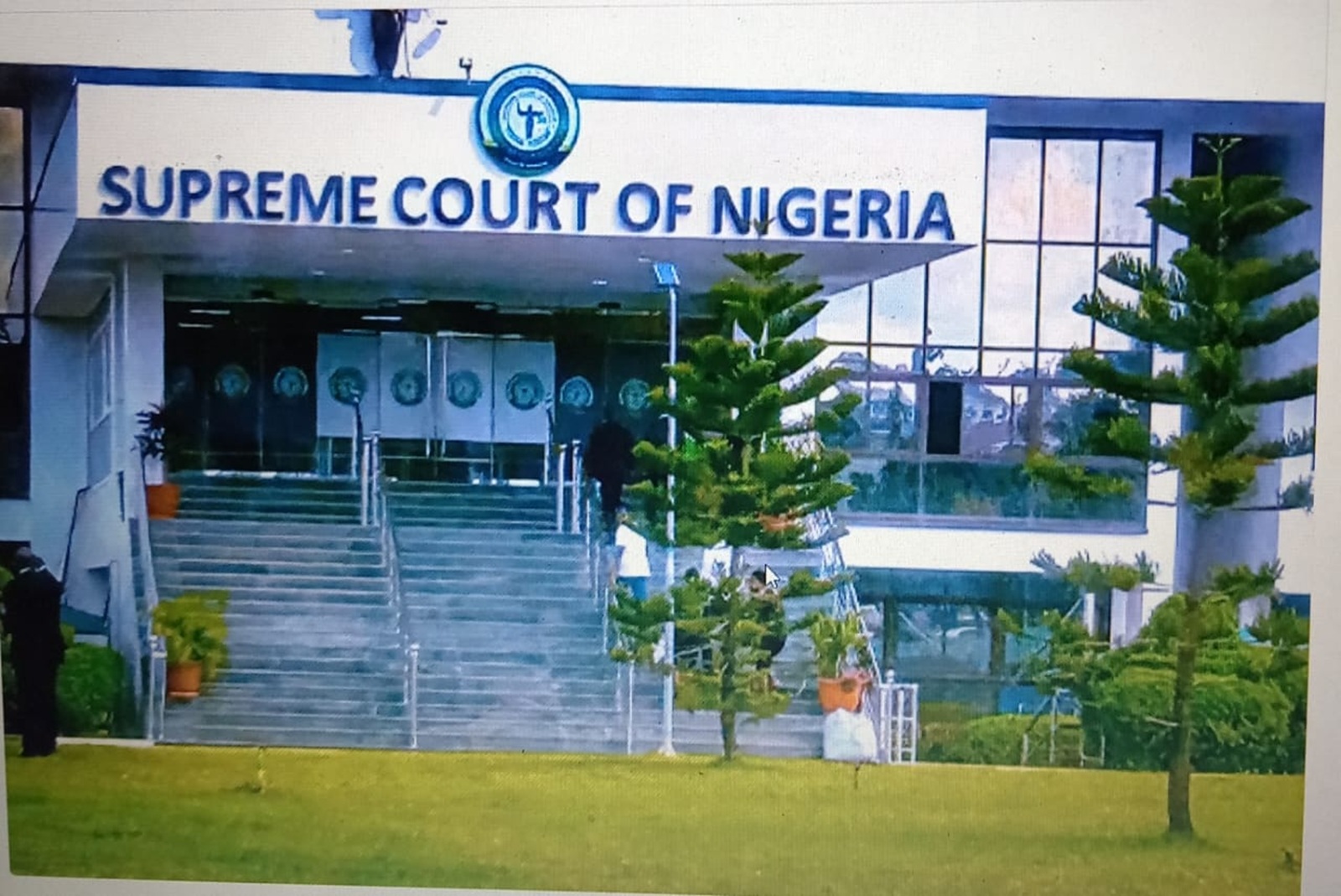








A recent decision emanating from the stables of the Supreme Court of Nigeria dwells on the jurisdiction of the National Industrial Court of Nigeria (NICN or NIC) in defamation cases. This was in Elegbe & Anor. v. HP International Schools Limited & Ors (Suit No. SC/CV/899/2025) decided on 20 February 2026.
The Supreme Court, in discharging its duty as the policy-making court, sought to provide the necessary guide to assist lower courts in deciding issues of jurisdiction of the NICN vis-à-vis the State High Court on defamation cases. But whether the apex Court succeeded in providing the much-needed clarity as desired is left to be seen.
Facts
Mrs. Emma Elegbe was employed by Hampton Preparatory (HP) International Schools Limited (“the School”) on 2 January 2017 where she served as the Head of School. Her employment was terminated on 1 May 2020. Her husband was Mr. Lolu Elegbe. He was not a staff member of the School. Meanwhile, the children of Mr. and Mrs. Elegbe attended the School.
Following the termination of Mrs. Elegbe’s employment, the School sent an email to parents of the pupils enrolled in the School on 2 May 2020 regarding this development. The School informed the parents that Mrs. Elegbe’s termination flowed from her hurried resignation on 1 May 2020 as a result of an ongoing investigation at the time.
Mrs. Elegbe was aggrieved by what she considered to be a damaging insinuation against her character by the School and proceeded to send an email on 4 May 2020 to parents of the pupils. In the email, she explained the circumstances surrounding her resignation. On his part, Mr. Elegbe had on 2 May 2020 communicated with some parents of the pupils via WhatsApp in response to enquiries arising from the School’s email of 2 May 2020 to the parents regarding his wife’s exit.
It happened that the School felt offended by the contents of the email of 4 May 2020 sent by Mrs. Elegbe and the WhatsApp message of 2 May 2020 sent by Mr. Elegbe which it found as defamatory of the School and its directors. Aggrieved, on 26 May 2020, the School (and its three directors) commenced an action at the High Court of Lagos State against Mr. and Mrs. Elegbe and strictly sought reliefs for the alleged defamation.
Mr. and Mrs. Elegbe filed a preliminary objection challenging the jurisdiction of the High Court of Lagos State to entertain the suit. They argued that being that the alleged defamation flowed from an underlying employment relationship between Mrs. Elegbe and the School, the NICN is the Court with the jurisdiction to entertain the suit and not the High Court of Lagos State.
In its ruling, the trial Court dismissed the objection on 24 September 2024. Aggrieved, Mr. and Mrs. Elegbe appealed to the Court of Appeal. In view of the conflicting decisions of the Court of Appeal on whether the NICN has jurisdiction over defamation claims, Mr. and Mrs. Elegbe (as Appellants), through their Counsel, urged the Court of Appeal to refer the constitutional question to the Supreme Court for authoritative determination.
Supreme Court’s Decision
Being a case-stated and not an appeal, the apex Court invited some eminent legal practitioners as friends of the court to submit legal opinions in addition to the legal arguments presented by the parties to the case. After due consideration, the Supreme Court held that the NICN lacked the jurisdiction to entertain the suit. Hon. Justice Adah, JSC delivered the Lead Judgment. The Chief Justice of Nigeria, Kekere-Ekun, CJN, and other Justices of the Supreme Court on the panel—Okoro, JSC, Ogunwumiju, JSC, Jauro, JSC, Sankey, JSC, and Ogbuinya, JSC concurred with the Lead Judgment.
Below are the policy-statements of the Supreme Court regarding the issue.
1. The NICN has jurisdiction to entertain matters touching on defamation but only on the condition that the alleged defamatory statements must be tied to employment relations as if with an umbilical cord.
Adah, JSC held (at p. 47):
“Where the alleged defamatory statements are so inextricably intertwined with the employment relationship that their truth or falsity cannot be determined without recourse to the terms of employment or the duties and obligations flowing therefrom, jurisdiction properly vests in the National Industrial Court.
According to Ogbuinya, JSC:
“At once, where a defamatory act is incidental or linked to a cause of action that is founded on employment, the NICN will still be vested with the jurisdiction to entertain the suit. That is to say, where the alleged defamatory act in a suit is dependent on a party’s employment such that it is inextricably tied to the apron strings of his employment and appurtenant thereto, the NICN will be invested with the vires to entertain it.”
In his Lordship’s opinion, Sankey, JSC stated:
“It is only where the alleged defamation or other cause of action is inseparably intertwined with the interpretation, enforcement, or violation of the claimant’s employment rights, such that the tort cannot be adjudicated upon without first determining core employment issues as enumerated in Section 254C of the Constitution, that the NICN may assume jurisdiction.”
On this, Okoro, JSC said:
“By the clear wording of section 254C of the 1999 Constitution, defamatory claims which arise squarely from labour or employment dispute, such that it cannot by any wit be divorced from other heads of claim, can be actionable before the National Industrial Court.”
Applying the principle, his Lordship held:
“The claims of the Respondents at the trial court were predicated independently on defamation without any connection whatsoever with the contract of employment between the 1st Appellant and the 1st Respondent, which had ceased to exist at the time of publication of the alleged defamatory material.”
2. Where the alleged defamatory statements are not tied to employment relations but exist independently, the NICN will lack jurisdiction even if the parties have or had employment relationship. In the same vein, where the defamation claim is against a person who is not in an employer-employee relationship with the claimant, the NICN will lack jurisdiction. In both instances, the State High Court is the proper court to deal with the matter.
Adah, JSC continued (at pp. 47-48):
“Conversely, where a claim of defamation exists independently as a tortious cause of action, does not require the interpretation or enforcement of an employment contract, and is directed against a party who does not stand in any employer-employee relationship with the claimant, such a claim falls outside the exclusive jurisdiction of the National Industrial Court and within the jurisdiction of the State High Court.”
His Lordship also answered in the affirmative that where an alleged defamatory publication emanated from an employee’s work relationship but made by a person who is not an employee, the State High Court has jurisdiction to entertain the matter. The implication of this is that assuming the defamatory statement in the instant case emanated from Mrs. Elegbe’s employment but the statement was made by her husband alone who is not an employee of the School, the NICN lacks jurisdiction to deal with any specific suit filed against him for defamation.
3. The principal claim before the court determines the court which has jurisdiction to entertain the entire suit. The court having the jurisdiction to hear the main claim, has the jurisdiction to hear the ancillary claims.
Ogbuinya, JSC held:
“The inelastic posture of the law is that a court which is equipped with the jurisdiction to hear a main/principal claim is bestowed with the vires to try an auxiliary/tributary claim that is parasitic thereon… Thus, where a party’s claim solely orbits around the universe of tort of defamation, then the High Court is armed with the jurisdiction to entertain the suit that hosts it.”
Adah, JSC at p. 48:
“A claim for termination of employment constitutes a principal claim. Where such a claim is properly before the National Industrial Court, any ancillary claim for defamation arising from or connected with the termination may validly fall within its jurisdiction.”
Applying the principle, Adah, JSC held:
“However, in the present case, no claim relating to the termination of employment was brought before the Lagos State High Court. Consequently, the National Industrial Court lacked the vires to entertain the allegation of defamation said to have been committed by the former employee and her spouse.”
Also, according to Jauro, JSC, “the main claim in this suit being defamation, does not fall within the subject matter jurisdiction of NICN under Section 254(C)(1).”
4. To determine which court has jurisdiction to entertain a matter, the entire pleadings as contained in the statement of claim must be examined.
Adah, JSC at p. 48:
“The jurisdictional question in cases of defamation alleged to arise in an employment context must be resolved upon a careful examination of the pleadings to ascertain the true nature of the dispute. Where, upon such examination, the cause of action is found to be fundamentally rooted in employment within the purview of section 254C of the Constitution, jurisdiction lies with the National Industrial Court. Where it is not, jurisdiction lies with the State High Court.”
Applying the principle to the case at hand, Adah, JSC stated at p. 29:
“In the instant case, a careful examination of the originating processes reveals that the Respondents’ cause of action is founded squarely on defamation, a tort injurious to reputation. The claim is neither predicated on any contract of employment nor on the enforcement of any condition of service. The mere fact that the alleged defamatory publication made reference to the Respondent’s [sic: 1st Appellant’s] resignation from employment does not, without more, transmute the claim into a labour or employment dispute.”
In delivering his Lordship’s opinion, Kekere-Ekun, CJN stated:
“In the case under reference, the alleged publications had nothing to do with employment rights, the enforcement of any labour remedy nor international best practices. It is a claim for defamation simpliciter and does not fall within the specialised jurisdiction of the National Industrial Court.”
A Critique of the Supreme Court’s Decision
I commend the Supreme Court for setting the correct principles constituting the policy-pronouncements to guide the lower courts on this issue regarding the jurisdiction of the NICN to handle defamation matters.
However, and with the greatest respect to the Learned Justices of the Supreme Court, the application of these principles to the instant case of HP International Schools was less than satisfactory. Instead of providing the much-needed clarity, the ultimate decision seems to throw the legal community into more confusion.
The defamation case has connection with the employment relationship
The Supreme Court’s position that the instant case has no connection whatsoever with the employment relations between Mrs. Elegbe and the School is, with respect, less than accurate. The reason is because the chain of connection is quite glaring. Below is how the alleged defamation was tied to the apron strings of the employment relations.
- There was an employment relationship.
- The employment was terminated.
- The employer, that is, the School—1st Respondent—issued a statement to parents of the pupils regarding the termination.
- The employee, that is, Mrs. Elegbe—the 1st Appellant—reacted by issuing a counter-statement in response to the email earlier sent by the School.
- Mr. Elegbe responded to enquiries by WhatsApp.
- The School now feels offended by Mrs. Elegbe’s email and Mr. Elegbe’s responses which it considered defamatory.
Now, before the trial Court can determine whether or not the alleged statements were defamatory, the Court may need to consider the veracity of the contents by reference to events which took place in the course of the employment. These events touch on the alleged hurried resignation due to an ongoing investigation. All of these point to one thing—that connection and employment relationship between Mrs. Elegbe and the School. This brings the defamation suit within the purview of an employment-related matter.
It would have been a different ball game if the alleged defamatory remarks in question were only made by Mr. Elegbe who was not an employee of the School and he was sued alone. Also, if the alleged defamatory claims against the School were made, even if by Mrs. Elegbe, on matters totally unconnected with her employment with the School, then the NICN will have no jurisdiction over the matter.
The Supreme Court was influenced by the framing of the claims
The Supreme Court hinged its decision on the claims of the School as set out. Indeed, the School’s itemised claims rested squarely on defamation. But the claims alone ought not to influence the Supreme Court’s decision as we have seen. Interestingly, in the course of the Judgment, Adah, JSC made a brilliant observation:
“The jurisdictional question in cases of defamation alleged to arise in an employment context must be resolved upon a careful examination of the pleadings to ascertain the true nature of the dispute… The combined effect of Section 254C(1) is that once a dispute is labour-centred or employment-related in substance, jurisdiction is exclusively reserved for the National Industrial Court, irrespective of how the claim is framed. No other court may validly assume jurisdiction over such matters, and any proceedings commenced elsewhere are constitutionally incompetent.” (Underlining supplied for emphasis)
The implication of the above statement of the law is that the Supreme Court ought to look beyond the claims as framed by the School. The apex Court was expected to satisfactorily demonstrate that there was a careful examination of the pleadings to ascertain the true nature of the dispute. Such careful examination would have shown a clear set of facts that the defamatory statement complained about was directly linked to the employment relationship between the School and Mrs. Elegbe. If for instance, Mrs. Elegbe made defamatory remarks about the School without any connection with her employment, that would have been a totally different matter.
The connection was tied to her explanation of the circumstances surrounding her resignation which eventually led to the alleged defamation. In other words, the case of defamation in the instant suit arose from, relates to, connects to, and is incidental to her employment termination. The cause of action in the instant case is inseparably intertwined with the employment issues which Mrs. Elegbe had with the School.
Some other Problematic Pronouncements
Ogunwumiju, JSC stated that the NICN does not have jurisdiction over every defamatory publication made in employment context. Hear his Lordship:
“The fact that a defamatory publication was made within the context of an employment relationship does not transform such a claim into a labour or employment matter. While the employment relationship may constitute the factual background against which the tort occurred, to characterize every defamatory publication made in an employment context as “employment-related” would defeat the purpose for which the NIC was established.”
With the greatest respect, this pronouncement appears to throw a dark shade into the conversation. The statement seems to run contrary to part of the reasoning of Adah, JSC which his Lordship claimed to totally support. Adah, JSC clearly stated, and rightly too, that where the cause of action (defamation) is found to be fundamentally rooted in employment within the purview of section 254C of the Constitution, jurisdiction lies with the NICN. Thus, a defamatory publication made in the context of an employment relationship is a matter for the NICN. The only problem was that Adah, JSC did not believe that the instant case of alleged defamation by the School was rooted in employment.
Another problematic pronouncement was that the NICN lacks jurisdiction over a defamation claim where the cause of action arose after employment termination. This was the argument canvassed on behalf of the School. In agreement, his Lordship, Ogunwumiju, JSC said:
“In the present case, the defamatory publication was made after the termination of employment and bears no connection with the 1st Appellant’s conditions of service. Rather, it is claimed to be actuated purely by malice intended to discredit the Respondents in their trade. Consequently, the NIC lacks jurisdiction over a defamation claim where the cause of action arises post-termination, even if it references a prior employment.”
Also, at page 29 in the Lead Judgment, Adah, JSC said:
“The defamation complained of arose after the cessation of the employer-employee relationship, and there is no evidence of any subsisting employment relationship between the parties at the material time. The Appellants consequently failed to establish any credible basis for invoking the jurisdiction of the National Industrial Court in respect of a claim wholly unconnected with labour or employment relations.”
By these statements, their Lordships tend to suggest that the cessation of employment automatically means that a matter arising from such employment or cessation of employment is no longer a matter for the NICN. With respect, that cannot be the correct statement of the law. I refer to the commendable opinion expressed by Sankey, JSC, in this case:
“To therefore suggest that upon the termination of an employment relationship, the jurisdiction of the NICN is automatically revoked, would be absurd, given the express provision of Section 254C of the Constitution. If this were to be the case, it would suggest that the NIC was set up to entertain disputes that arise only in the course of a subsisting employment relationship.”
Conclusion
My message to the lower courts is to carefully note the policy-statement of the Supreme Court in the case under review but ensure a proper application of the principles in deciding cases brought before them. Being case-stated, the established principles are the fundamental takeaways from the decision.